
Helping Your Dog Through Fireworks & Summer Storms
Summer brings backyard barbecues, family gatherings, and longer days—but for many dogs, it also brings something much less enjoyable: fireworks and thunderstorms.
If your dog paces, pants, trembles, hides, barks, or seems unsettled when the sky gets loud, you're not alone. Noise sensitivities are incredibly common, and they don't mean your dog is being stubborn or "dramatic." They're simply scared.
The good news? With a little preparation and support, you can help your dog feel safer and more comfortable when the world gets noisy.
Why Are Dogs Afraid of Loud Noises?
Dogs experience the world very differently than we do. Their hearing is far more sensitive, which means fireworks and thunder can feel sudden, unpredictable, and overwhelming.
Some dogs are naturally more sensitive than others, and fear can develop at any age—even in dogs that never seemed bothered before.
Rather than trying to "push them through it," our goal is to help them feel safe.
Create a Safe Space
Before the fireworks begin or the storm rolls in, prepare a quiet retreat where your dog can relax.
A good safe space might include:
A crate or covered pen (if your dog already enjoys using one but now is not the time to introduce one)
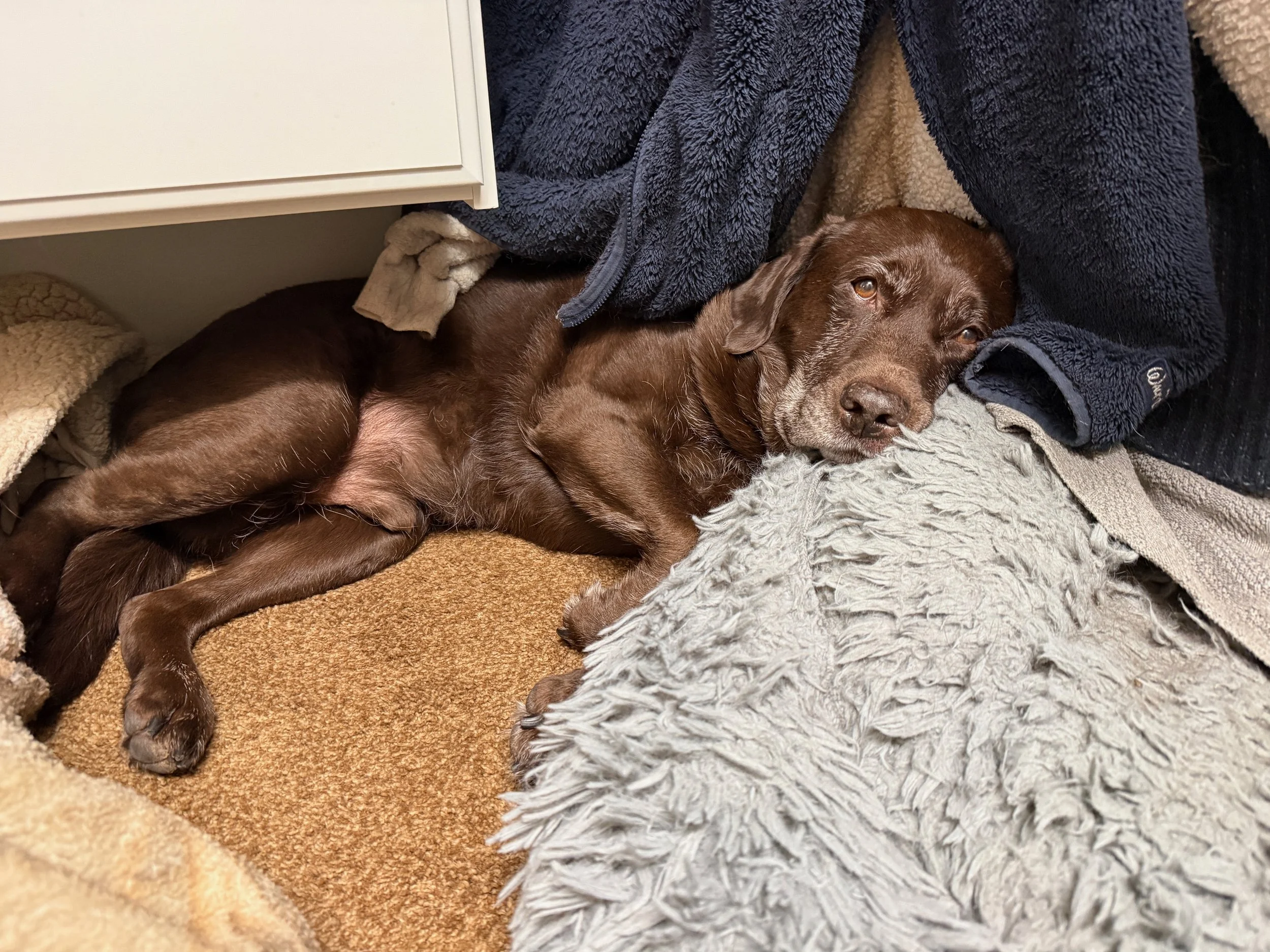
A quiet interior room (like Karl, in his safe space in the closet)
Soft bedding or favorite blankets
A favorite toy or something that smells like you
White noise, a fan, or calming music to help mask outside sounds
The goal isn't to hide your dog away—it's to give them a place where they can choose to feel secure.
During the Fireworks or Storm
One of the biggest myths in dog training is that comforting your dog will "reinforce" their fear.
It won't.
Fear is an emotion, not a behavior your dog is choosing. If your dog wants to be close to you, let them. Calm petting, quiet reassurance, or simply sitting nearby can help them feel supported.
You can also offer enrichment to help redirect their attention, such as:
A stuffed Kong
A Toppl
A LickiMat
A Woof Pupsicle
A favorite long-lasting chew
Even if they aren't interested in food, simply having those options available can be helpful. Many of these enrichment tools—including Toppls, LickiMats, Woof Pupsicles, and long-lasting chews—are available in our Enrichment Shop at all three locations. Stop by anytime if you'd like help finding the right option for your dog.
Help Them Before They're Scared
One of the best things you can do is prepare before the noise starts.
On days when fireworks are expected:
Exercise your dog earlier in the day.
Bring them inside before the festivities begin.
Close windows and curtains to reduce flashes and outside noise.
Have enrichment activities ready before your dog becomes anxious.
Planning ahead often makes a big difference.
Build Confidence Year-Round
Helping a noise-sensitive dog isn't just about surviving the Fourth of July.
Throughout the year, you can gradually build positive associations by pairing low-volume recordings or everyday sounds with treats, play, and praise.
Keep sessions short, positive, and easy. Let your dog choose to participate, and never force them to approach something they find scary.
Small wins over time can build lasting confidence.
A Special Note for Senior Dogs
If your older dog has suddenly become fearful of storms or fireworks, you're not imagining it.
Changes in hearing, vision, or cognitive health can make loud noises feel even more confusing and overwhelming.
For senior dogs, sticking to familiar routines, providing extra comfort, and talking with your veterinarian about anxiety or cognitive support can make a tremendous difference.
When Should You Ask for Help?
Some fear is mild. Other times, it can seriously affect a dog's welfare.
Reach out to your veterinarian or a qualified positive reinforcement trainer if your dog:
shakes, drools, or panics during loud noises
attempts to escape or injures themselves
damages doors, windows, or crates while trying to flee
begins reacting to everyday sounds like vacuums, traffic, or household appliances
There are many tools available—including behavior modification plans and medications—that can help your dog feel safer.
Remember…
You don't have to "fix" your dog's fear overnight.
Sometimes the most powerful thing you can do is simply give them a safe place, stay calm, and let them know they're not facing the scary stuff alone.
If you're not sure where to start, we're here to help. Our team includes experienced behavior professionals who can help you choose enrichment activities, calming tools, and management strategies that fit your dog's individual needs.
Whether you're looking for the right chew, an enrichment toy, or guidance on helping your dog feel more comfortable during fireworks and storms, we'd love to help.
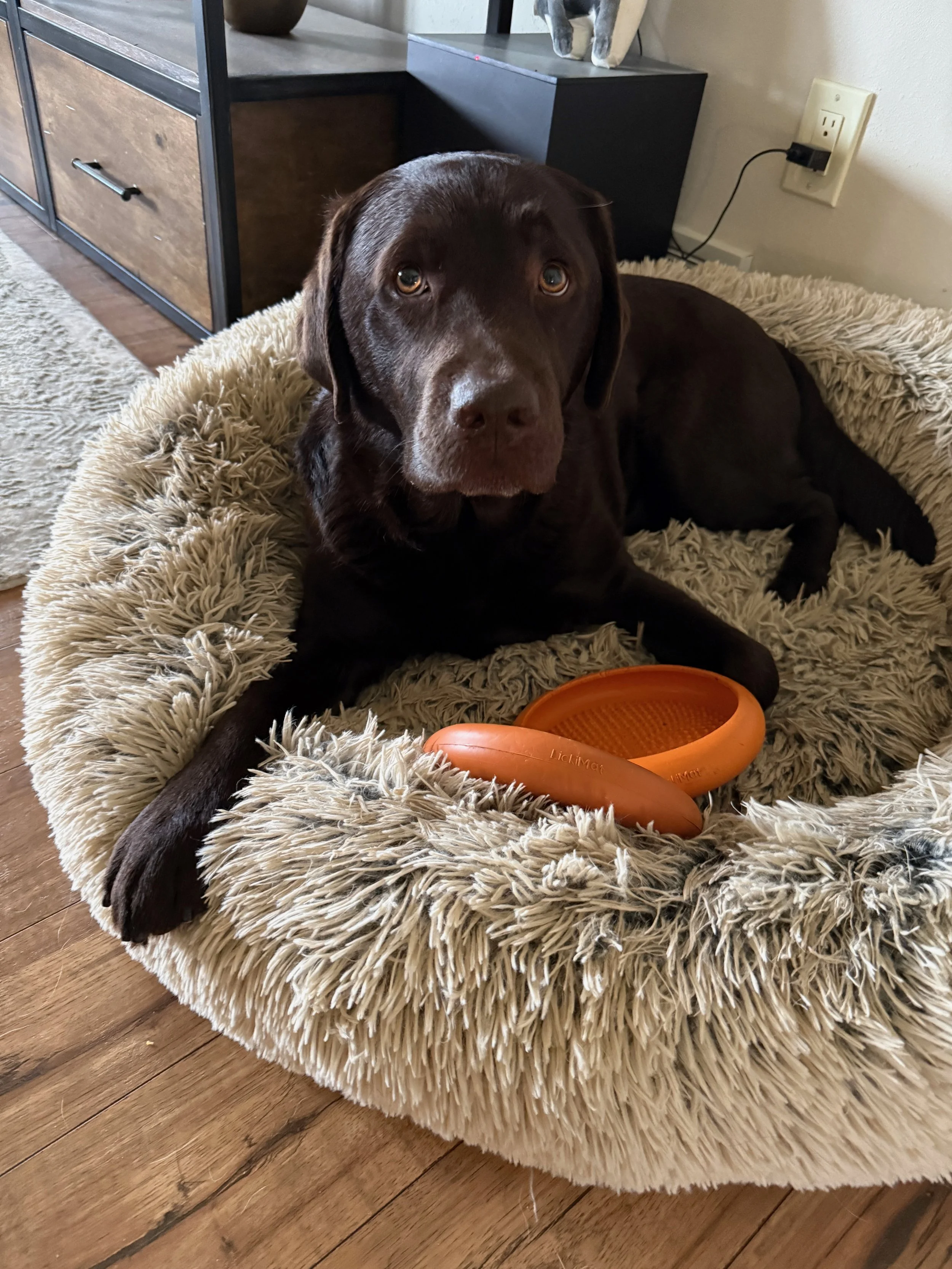
Bourbon with his Lickimats